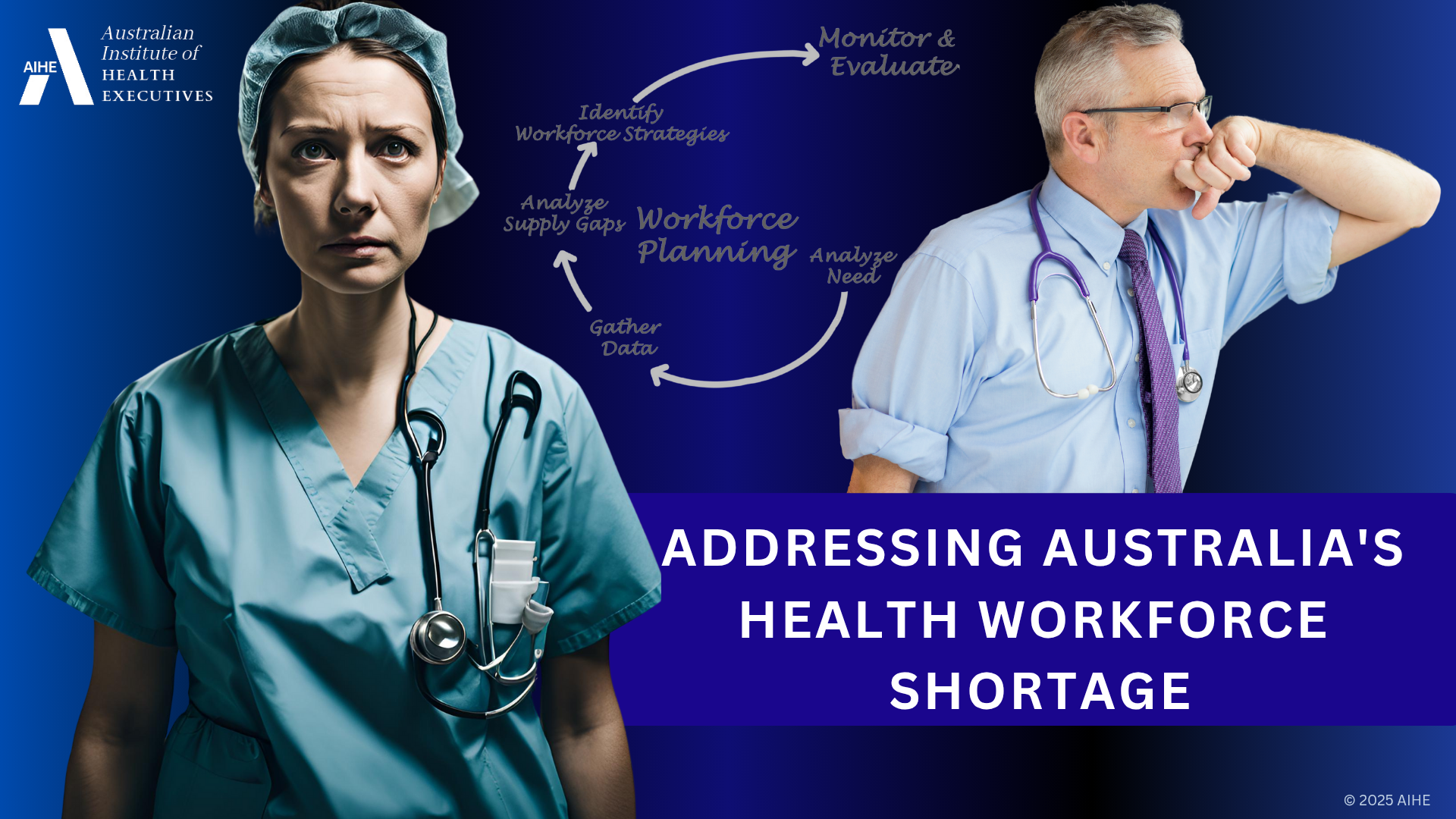


First published in MJA Insight, Issue 18 (May 2023) authored by our Chief Executive, Dr Sidney Chandrasiri.
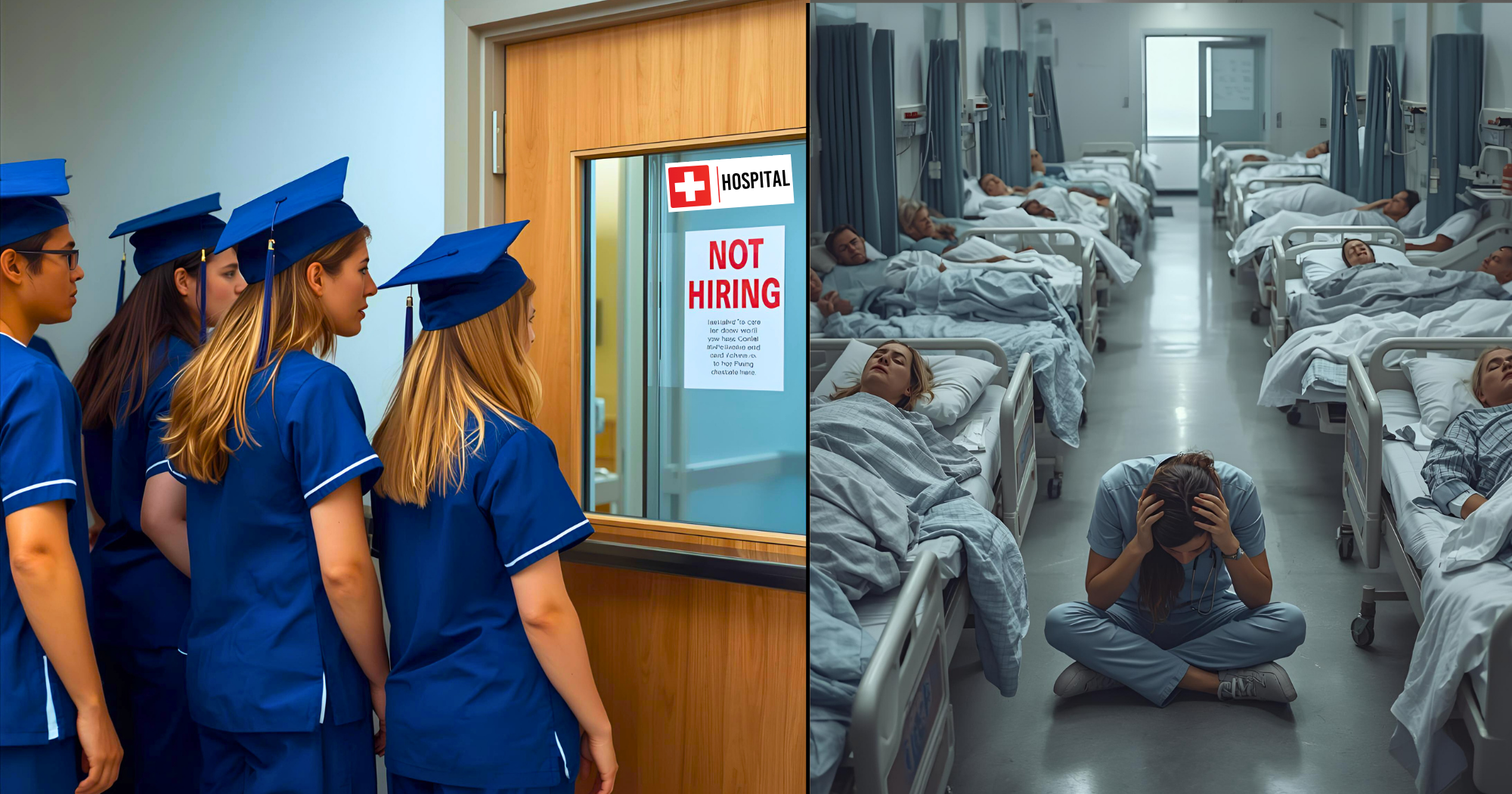
Australia’s health care sector is in crisis. Emergency departments are bursting at the seams, waiting times have blown out, ambulances are often not available, elective surgery backlogs are overflowing, and health care workforce shortages are making headlines around the nation.
These are the unfortunate and very real sequalae of a post-COVID-19 (coronavirus disease 2019) world.
What is happening to the health care workforce?
The World Health Organization has estimated a projected shortfall of 10 million health care workers by 2030. A Care Workforce Labour Market Study commissioned by the Australian Government in 2021 has predicted a gap of more than 200 000 full-time care workers by 2050 in Australia alone.
Health Workforce Australia has verified this estimate to confirm a shortage of more than 100 000 nurses and more than 2700 doctors just within the next three years. The Committee for Economic Development of Australia (CEDA) has predicted that the skills shortage in aged care itself could reach 110 000 or more in the next decade and well over 400 000 by 2050.
All these are pointing towards what seems an ominous and rather catastrophic health care worker shortage.
What can be done?
Four things: production, attraction, retention and sustainability
Increasing the supply of health care workers would seem the most obvious solution to this crisis. However, simply raising the number of medical and nursing graduates will only cause bottlenecks for training placements and will not achieve efficient distributions across geography and disciplines.
Rightly so, state and federal governments have unleashed a host of initiatives in an attempt to secure a steady pipeline of health talent who are better distributed to serve the health needs of the Australian population.
The 2021–2031 National Medical Workforce Strategy, published by the Australian Government Department of Health and Aged Care, has prioritised actions to rebalance the maldistribution of doctors, reform medical training pathways, and build generalist capability in the incoming medical workforce.
Approaches to workforce planning
A change in the approach to medical workforce planning has been suggested, with training numbers of new graduates being proposed to be determined by community health need rather than service requirements of hospitals or being driven by the lucrative attraction of certain specialties
This needs-based methodology is greatly welcomed as it will allow for interventions to promote specialties that are in undersupply, inform a more balanced allocation and distribution of training places, and allow informed career decisions for junior trainees according to areas where there is ongoing work.
Changes to medical and nursing training pathways are also being considered as a medium to long term strategy, with a greater focus on generalist and discipline-related skill development being prioritised over requirements to acquire higher research degrees or other fringe academic training activities.
The recognition of the need to achieve a better balance between generalist and subspecialisation in both medical and nursing competencies will not only enable the development of a more agile health workforce, but it is also a nod to value-based health care models in which there is a need to focus care models around patient conditions or diseases as opposed to niche super-specialised areas of health professionals. As an example, hospital-level generalists specifically trained in the management of diabetes could provide an all-inclusive yet high level of endocrinology, cardiology, vascular, nephrology and ophthalmology care that is needed in managing the evolution of diabetic complications, with referral to specialists being reserved for the more complex and atypical presentations.
New partnerships
Creating new partnerships between education providers, accreditation bodies and health services may also allow novel education models to be considered.
“Career laddering” is such a model where upskilling or cross-skilling opportunities and advanced training pathways can be developed for health care staff to pursue the acquisition of additional and advanced qualifications while remaining in current practice, such as accredited pathways for physician assistants and nursing practitioners to become physicians, or dental hygienists to become dentists. While there are organisations considering conceptual models for career laddering programs between physician assistants and nursing assistants, practical implementation of this at a primary care or hospital level is still in its infancy. Notwithstanding the appreciation of competitive interests and differing motivations of the stakeholders affected, and requiring extensive consultation and in-depth consideration, this is perhaps the degree of innovation and reformative deliberations that the workforce crisis requires of us now as health leaders.
What the government can do
Both state and federal governments are well positioned to play a key role in this space.
State governments have targeted the retention and recruitment of health worker numbers through additional funding to hospitals and emergency services. These have included initiatives such as the Victorian government’s Healthcare Worker winter retention and surge payment, free meals for overnight shift workers, and a Pandemic Repair Plan looking at training and appointment of a greater number of public health care workers.
Increasing skilled migration quotas to attract international health workers is a post-pandemic strategy aimed at critical health workforce shortages where the skilling of Australian workers is not yet able to keep pace with industry demand. The Australian Government recently raised the permanent migration cap by 35 000 to reach a quota of 195 000 places for the 2022–23 financial year.
There have also been measures taken to improve national health practitioner registration processes for onshore migrants, provide relocation support, and offer grants towards accommodation and childcare expenses. Supporting and increasing the availability and affordability of housing is particularly critical to attract migrants to regional and rural health care settings. The challenge with overseas recruitment, however, is that as most countries are also facing health worker shortages, it is unlikely to yield the anticipated numbers.
A forward-thinking option that may warrant consideration is to create training programs in the countries from which we are recruiting, as this would enable standardisation of clinical competencies and transferrable licensing and accreditation, barriers that currently significantly delay or prevent international health workers from working to the top of their scopes in Australia.
Understanding this, many health care leaders have taken matters into their own hands and are implementing novel career pathways for graduate nurses, such as cadet programs, graduate fellowships, and training pathways for nurse practitioners or physician assistants. Enabling health care worker movement across sites and specialties through creating innovative employment models and practices, including portability and uniformity of benefits and employment arrangements across services, is also being explored.
There could be better coordination of these initiatives; however, the recently announced Commonwealth initiative to offer incentive payments to encourage student entry into, or further study in, nursing for public sector employees is an example of a promising initiative that has instead been met with criticism and mixed responses.
Although commendable for boldness and novelty, I believe these types of initiatives would see more benefit if they can be applied across and inclusive of both public and private health sectors, so that there is a more whole-of-health system approach to tackling workforce shortages, rather than a segmented sector-led approach, which I believe will only risk further fragmenting the Australian health sector.
Digital health care options
COVID-19 demonstrated significant uptake in telehealth and virtual care and supervision models, and there remains immense scope for digital health to be further leveraged in supplementing current and future workforce shortages from a sustainability perspective. The National Digital Health Strategyaims to develop a workforce that is confident and capable of using digital health technologies and services.
Digital literacy and embedding digital health in the training pathway will allow non-traditional models of care to be safely supported, from access to specialist supervision and advice through to remote monitoring and virtual care models. Decision support software, electronic referrals for diagnostic tests and prescribing support, and strengthening of Australia’s digital health infrastructure are all further foundational areas that should be refined and streamlined to supplement care delivery amid this current and impending workforce shortage.
Workforce culture
Last but certainly not least, and most importantly not to be overlooked, is the significance of creating positive workforce cultures and staff wellbeing programs to enhance retention and sustainability of our current health care workers as well as incoming new generations. Addressing the all too prevalent workplace challenges, such as bullying, harassment and discrimination, unconscious and conscious bias, and tall poppy syndrome, and enacting procedurally fair complaint handling processes are the very basics of what health leaders can start actioning in the short term. No matter how innovative, uniquely trained, broad scoped or digitally literate the new health care workforce that’s being assembled will be, and workforce shortage or not, the fundamental need of every individual to work in a positive environment and supportive culture should never be underestimated.
Conclusion
The solutions to addressing Australia’s health care workforce shortage are multifaceted and require a coordinated effort between state and federal governments, colleges, unions, and local health departments. Sufficient planning and proactive steps must be taken to ensure gaps in care provision are filled and burnout rates are reduced, and to fundamentally ensure patients continue to receive only the very best of health care.
Follow AIHE to be informed and stay ahead of the curve.
Register for our upcoming programs at aihexec.com/events