


Why So Many Senior Healthcare Leaders Struggle to Make It Past Year One (And How to Change the Story)
Why senior healthcare leaders fail in year one, and how trust, transition strategy and system insight can drive lasting executive success.
We’re Funding Emergency Departments for the Wrong Problem: Here’s How to Fix It
Complex patients need complex funding: reforming ED payment models to reward safety, coordination and system outcomes.

ChatGPT Health is Coming to Australia: Everyone Please Remain Calm
ChatGPT Health is coming to Australia. We look at what it means for healthcare leaders, governance, trust, and the future of care.

Signal, Noise, and the Quiet Judgement of Healthcare Data Analysis
A practical guide for healthcare leaders on interpreting data, identifying early warning signals, and avoiding metric-driven overreaction.

Minimising the Impact of Funding Cuts: How We Can Build Financial Resilience Without Eroding Care in 2026
How to minimise the impact of funding cuts in 2026 while building financial resilience and protecting quality care.

Elevate Your Career with Professional Development Healthcare in Australia
The NSW Health Megatrends Report reveals how healthcare is evolving and the strategic choices leaders must make to stay ahead.

Leading Healthcare Through the Megatrends Shaping 2040
The NSW Health Megatrends Report reveals how healthcare is evolving and the strategic choices leaders must make to stay ahead.

When the Storm Breaks: Real Health Leadership Resilience in Disaster Management
The cyclone in SriLanka shows the courage, trust and adaptability health systems must embrace. And the vital lessons Australia can learn for its own disasters.

Why Smarter Spending On Hospitals Isn’t About Saving Money
Smarter hospital spending is vital to Australia’s health system future. Here’s why productivity, not funding, is now the real challenge.

Why the New Aged Care Act Won’t Magically Fix the Bed-Block Crisis and What Must Happen Next
How the new Aged Care Act impacts the bed block crisis and what health leaders can do to improve hospital flow now.

Professional Development in Healthcare: Building the Leaders of Tomorrow
Professional Development in Healthcare by Australian Institute of Health Executives—enhance your leadership, skills, and career growth in the health sector.

When Complaints Become Weapons: Restoring Fairness and Trust in Healthcare
How healthcare’s complaint systems can be misused, and what leaders must do to restore fairness, trust and accountability.

Healthcare’s Polite Hypocrisy Problem
A hard-hitting look at healthcare’s polite hypocrisy and how leaders can balance transparency and integrity. It’s time to stop applauding false excellence.

A Quiet Revolution in Healthcare: The Patient Voice in Outcome Based Funding
Australia’s first private health insurer incentive payment in driving meaningful improvement in Australian healthcare outcomes.

Strengthening Clinical and Digital Governance in the AI Age
Discover how healthcare leaders can build robust clinical and digital governance to harness AI safely, ethically and effectively in patient care.

Is it time for an “AHPRA” for Healthcare Leadership?
We call for an AHPRA-style regulator to hold healthcare leaders accountable and close the healthcare governance gap.

Designing Care, Not Just Delivering It: Why Clinical Service Planning Matters Now
Build the skills to lead effective, data-driven clinical service redesign and deliver sustainable health system improvements.

Ambulance Ramping in Australia: A National Crisis in A Microcosm
Ambulance ramping in Australia is a national crisis in microcosm, exposing system-wide hospital and emergency care failures.

When Power Becomes Toxic: A Reflection on Intimidation in Healthcare Leadership
When senior healthcare leaders use intimidation and positional power to force compromise, the cost is trust, safety, and integrity.

How Ready Are We For Value-Based Healthcare in Australia?
Australia can build readiness for value-based care with targeted pilots and a pragmatic roadmap to improve outcomes and sustainability.
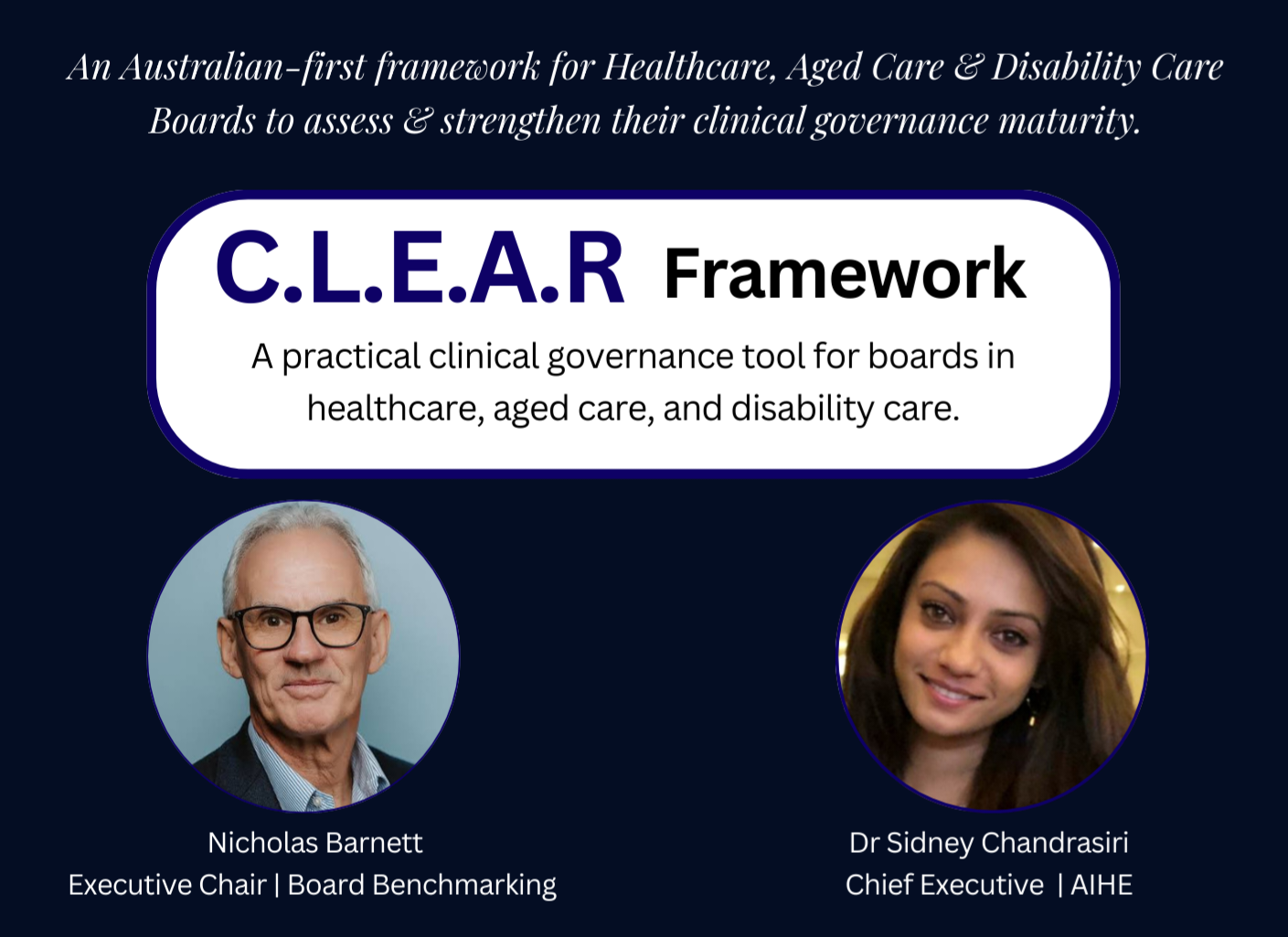
Seeing the Blind Spots in Board Oversight: Using CLEAR to Transform Health Board Clinical Governance
This new CLEAR framework helps boards strengthen clinical governance, ensuring safer care, better oversight, and patient trust.

Why Factional Leadership Is Booming in Healthcare
Factional leadership is rising in healthcare. Discover why it’s booming, its risks, and how leaders can bridge these divides.

What If We Measured Health Leadership Differently?
Health leadership success shouldn’t just be about KPIs. Real impact is trust, culture, sustainability and workforce wellbeing

When There’s Nowhere To Go: Confronting Australia’s Acute Mental-Health Bed Crisis
Australia faces a crisis in acute mental health beds straining EDs and exposing urgent system gaps for healthcare leaders.

Nursing Graduates Without Jobs: What the Workforce Mismatch Means for Healthcare Leaders
Nursing shortages grow while graduates remain jobless. Health leaders must fix workforce planning.

Why Hospital Leaders Need a New Strategy for the Aged Care Bed Crisis
Hospital leaders must adopt new strategies to tackle aged care bed block, improve patient flow and reduce system-wide pressure

From Volume to Value: Why Australian Health Leaders Must Lead System Transformation
How Australian healthcare leaders can drive the shift to value based care for better outcomes and sustainability.

Rethinking Patient Flow: The Hidden Barriers Healthcare Leaders Can’t Ignore
Discover how hidden system barriers impact patient flow and why healthcare leaders must drive redesign for safer, more efficient care.

A Breakthrough in Patient Safety: Can Financial Penalties Reduce Hospital Acquired Complications (HAC)?
How financial penalties can reduce hospital acquired complications (HAC) in Australia – insights for healthcare leaders.

AI in Multidisciplinary Care Teams: How Leaders Can Make It Work
Learn how to incorporate AI in multidisciplinary care teams and how healthcare leaders can make it work

Why Board Diversity Alone Isn’t Enough to Improve Healthcare Governance
Board diversity matters, but clinical governance capability is the real differentiator for healthcare boards. Learn why and what you can do about it.

Fundamentals of Value Based Healthcare: An Introduction for Health Leaders
Learn how value based healthcare works in Australia. Discover its benefits, principles, and strategies for improving patient outcomes and lowering costs.

The Future of Health Leadership: Leveraging AI in Data Analysis
Learn how AI can be leveraged in healthcare data analysis to elicit meaningful insights for healthcare leadership.

Healthcare Governance Breakdowns: Lessons for Leaders
Healthcare governance fails threaten trust, safety, and strategy. Discover key lessons for leaders to build resilient, transparent and effective boards.

5 Leadership Reflections to Reset Healthcare: How to Reflect, Recharge and Lead with Clarity
Discover 5 powerful leadership reflections to reset healthcare. Learn how to reflect, recharge, and lead with clarity for a stronger, more resilient team.

Have We Mistaken Workforce Resilience for Workforce Exploitation?
Is workforce resilience empowering healthcare workers or enabling exploitation? Explore how healthcare demands may be hiding deeper systemic issues.

The New Bulk Billing Changes: For Healthcare Leaders
New bulk billing changes come into effect with a new practice program and 12.5% loading. Here’s what healthcare leaders need to know.

Why Clinical Governance Training Is Now Essential for Healthcare Boards
Discover why clinical governance training is essential for healthcare boards. Strengthen oversight, manage risks and build trust with specific programs for healthcare boards.

Private Healthcare’s skyrocketing medical specialist costs
Private healthcare costs are soaring, with medical specialist costs driving record out-of-pocket expenses. Explore what’s behind this and the impact on patients.

Healthcare Leadership Training – Build Stronger Medical Teams
LinkedIn Facebook Twitter In the dynamic and ever-evolving landscape of modern healthcare, effective leadership is not just an advantage—it’s a necessity. The quality of patient care, the efficiency of operations, and the morale of staff all hinge on the strength of your leadership. At the Australian Institute of Health Executives, we understand these critical demands. That’s why we are dedicated to providing world-class Healthcare Leadership Training designed to empower current and aspiring leaders within the medical field. Our comprehensive programs

Director Development Programs for Healthcare Leaders
The healthcare sector is a dynamic and challenging environment, demanding leadership that is not only skilled but also deeply strategic and adaptable. For those stepping into or already excelling in director-level roles, the need for continuous development is paramount. At the Australian Institute of Health Executives, we understand these advanced requirements. We offer specialized Healthcare Director Development Programs designed to equip senior healthcare professionals with the sophisticated insights and capabilities needed to navigate complex organizational landscapes, drive innovation, and lead

Keeping it real: patient-centric adverse event management
LinkedIn Facebook Twitter Article originally published in Issue 32 MJA Insight, August 2022 By continuously disclosing what we know, through the open disclosure process, and listening to families, it will become clear from them whether or not they believe an incident has been adequately investigated to the level they expect, and whether or not they are satisfied with the outcomes HEALTH care in Australia encompasses a complex yet comprehensive and broad spectrum of service provision. From general practice to specialist

The business of healthcare: key trends and projections
LinkedIn Facebook Twitter The Australian healthcare system is poised for substantial transformation in the coming years. The Australian healthcare landscape is undergoing a period of rapid transformation, bringing significant challenges and opportunities in the coming years. Several key trends are poised to reshape the delivery, financing, and accessibility of healthcare services, demanding proactive adaptation from policymakers, providers, and technological innovators. We provide a forward-looking perspective on these key trends anticipated to shape the industry in 2025 and beyond, focusing on

Is imposter syndrome a more acceptable cause of female leader underrepresentation than tall poppy syndrome?
In the lead up to this international women’s day, have you noticed just how many discussions, posts, articles, self help courses, books and corporate workshops are about the perils of imposter syndrome? Whilst both imposter syndrome and tall poppy syndrome have been associated with leadership, it seems that in recent years there has been an exponentially growing recognition of the impact that imposter syndrome can have on female leadership, while tall poppy syndrome continues to remain a somewhat more taboo

AIHE’s bespoke professional development drives exceptional healthcare leadership
The healthcare landscape is undergoing continuous and often rapid transformation, driven by technological advancements, evolving patient needs, and increasing regulatory complexities. Effective and impactful leadership is paramount in navigating these challenges and ensuring the delivery of high-quality, patient-centered care. While generic leadership training can offer a foundational understanding, bespoke professional development sets itself apart in its ability to cultivate tailored skills and competencies that directly address the unique demands of personalised healthcare leadership. This targeted approach is instrumental in developing
Australian Healthcare Business Trends for 2025
The Australian healthcare sector is undergoing rapid transformation, driven by technological advancements, an aging population, workforce restrictions and changing patient expectations. In 2025, there are several key trends poised to reshape the industry, impacting businesses across multiple health sectors and industries. Understanding these shifts is crucial for today’s health leaders, from both a strategic planning and potential growth opportunity perspective, as well as for ensuring the medium to long-term sustainability of existing services. One significant trend we expect to see

Consensus vs Decisive Leadership Explained
Discover the key differences between consensus and decisive leadership – and learn which style drives stronger results for teams and organisations.

Reducing Australian Emergency Department Wait Times
Prolonged waiting times in Australian Emergency Departments (EDs) are back in the headlines this week, and represent a complex, multifaceted challenge with significant implications for patient outcomes, staff morale, and overall healthcare system efficiency. We provide a step-by-step framework for identifying bottlenecks and implementing targeted solutions. Step 1 – Collect the relevant data Patient Flow Metrics Collect granular data on ED presentation times, triage categories, time to first assessment, time to treatment initiation, length of stay in the ED, and
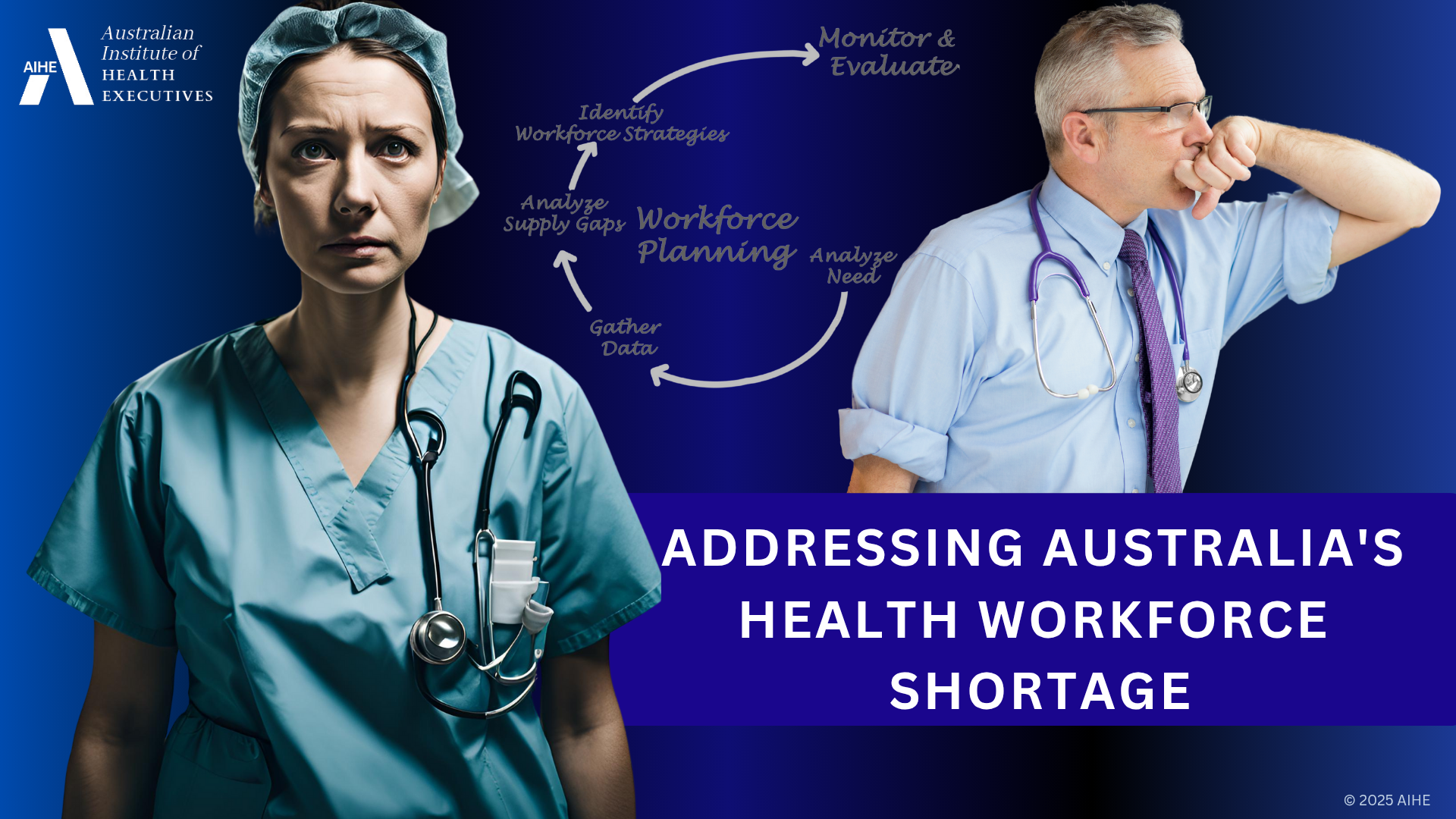
Addressing Australia’s Health Workforce Shortage
LinkedIn Facebook Twitter First published in MJA Insight, Issue 18 (May 2023) authored by our Chief Executive, Dr Sidney Chandrasiri. Australia’s health care sector is in crisis. Emergency departments are bursting at the seams, waiting times have blown out, ambulances are often not available, elective surgery backlogs are overflowing, and health care workforce shortages are making headlines around the nation. These are the unfortunate and very real sequalae of a post-COVID-19 (coronavirus disease 2019) world. What is happening to the