

Facebook
Twitter
LinkedIn
Since this really just couldn’t be put off any longer, here we are then, biting the bullet and diving head-first into the latest healthcare drama recently stirred up by the impending arrival of ChatGPT Health in Australia. And no, it’s not just another acronym that can be added to your email signatures, fellow healthcare leaders.
The reality is that Australia’s healthcare leaders have well and truly faced many technological inflection points by now. The humble fax that refused to die, the telehealth craze that skyrocketed like no one’s business, the virtual care provision by remotus-controlus, and now —ChatGPT Health!
But what exactly is ChatGPT Health, you might ask? Honestly, I’m glad you asked.
Imagine your friendly neighbourhood giver of medical advice, and now imagine your friendly neighbourhood giver of medical advice with AI powered capability AND with a much improved bedside manner. No, this actually isn’t any more sci-fi sounding than what ultrasound probably was back in the 1950s.
But before we all immediately start calling ourselves “Digital Health Futurists,” let’s unpack what this truly means for Australia’s healthcare leaders. Let’s really get into all the good, the awkward, and the “well, that happened” moments.
The Arrival: Not with a Bang, But with a Ping
ChatGPT Health isn’t storming Australia like the cavalry charging across a raging river. It seems to be slipping in quietly, more like a calendar invite that no one remembers accepting.
“Hey, how can I help?” it says politely.
And before anyone has even thought to convene the steering committee, it seems to have already begun calmly translating decades of revered clinical expertise into… uh plain English. All without even having asked for a badge, a credential, or even a seat at the committee meeting table.
We know that OpenAI has begun a limited rollout of ChatGPT Health in Australia, meaning some users can already access it and connect things like medical records and wellness apps for more personalised responses.
Now for healthcare leaders, this is kind of a big deal. Because it seems like there could be a reckoning of sorts, with an ability to bulldoze long standing information bottlenecks and turn them into… actual conversations that people want to join.
Does Joe Blogs need a quick summary of the latest diabetes care guidelines? Well, Mr Blogs could just Ask ChatGPT Health.
Would Jane Doe like risk stratification insights before deciding on that surgery? Ms Doe could just Ask ChatGPT Health.
You get the picture.
But to be clear, it’s also very different from the Doctor Google that we’ve come to know and hate. Doctor Google is essentially a very fast librarian with no bedside manner – you type in a symptom, it hands you 47 links, 3 ads, and a strong suggestion that you’re either fine… or dying. ChatGPT Health on the other hand, turns static information into a two-way conversation which is a big psychological shift – you ask, it responds, you ask again, it adapts. It synthesises information into a coherent explanation in plain language.
And no, it hasn’t yet staged a hostile takeover of the hospitals or tried to swipe stethoscopes from the human clinicians. But it has already started to give us regular healthcare-related humans some seriously supercharged cognitive bandwidth.
The question now is… what happens when millions of Australians suddenly have instant, unfiltered access to all these glorious health insights?
Whether we like it or not, the system’s about to be flooded with some very informed, very chatty patients — and the only thing more unprepared for this than the system, might just be our egos. Because the chatGPT Health genie is well and truly coming out of the bottle, and it’s coming armed with relevant emojis, simple explanations, and probably a healthy dose of sass.
The Promise: Clinical Support Without the Judgement
One of the most irresistible things about ChatGPT Health is the promise of a clinical assistant that actually shows up. No attitude, no coffee breaks, no “I’ll get back to you in three weeks.” It’ll be available 24/7, non-judgmental, and probably faster than your barista on a Monday morning.
Picture this: a lone GP in Kalgoorlie at 2 a.m., wrestling with a rare paediatric condition. There’s no specialist on call, no one within shouting distance really, and the only other brain around is perhaps a very sleepy marsupial. Enter ChatGPT Health —your context-aware, evidence-fed sidekick that can synthesise the latest guidance faster than you can mutter “AusPath guidelines.”
Limited rollout or not, that’s pretty awesome.
Sure, there is the catch that any AI is only as good as the data it’s learned on, the guardrails around it etc (and what is ChatGPT Health if not just AI by another name). Because if we we don’t curate robust clinical datasets that’re free from bias, update constantly, and source ethically, we could risk feeding this robotic clinical beast stale or skewed information.
Regardless, ChatGPT Health is still promising to be pretty impressive. Kind of like a really adorable and capable puppy, who will require some serious supervision, careful training, and a good set of boundaries.
Ethics and Trust: The Elephant in the Telehealth Clinic
If you’ve scrolled through even a tiny corner of LinkedIn’s healthcare leadership posts at some point in your life, you will know the rhetoric: good leadership is not just about clinical brilliance or managerial wizardry. It’s about trust, empathy, integrity etc etc and patient safety.
So what will happen when chatGPT Health crashes into this trust-and-empathy fuelled party of what good healthcare leadership ought to look like?
Besides all of us suddenly turning into ethics professors I mean.
Well, those abstract musings of what good healthcare leadership ought to be, turns into questions that actually matter, for a start. Questions like:
- Who owns the data in an AI-assisted consultation? The patient, the clinician, or the machine that’s probably judging your handwriting?
- How do we protect patient privacy while feeding AI enough data to be helpful, without accidentally turning it into a gossip columnist?
- And if AI confidently hands out a plausible-but-wrong clinical suggestion… do we have an actual plan, or just the ceremonial panic button?
These are the kinds of important questions that we won’t be able to solve with yet another healthcare chinwag or intellectual talk-fest. It’s here that healthcare leaders must start to actually do some things. Things like ‘ensuring transparent data governance, establishing clear consent frameworks, and developing fail-safe mechanisms for clinical oversight, to begin with.
Because as much as we love innovation, we won’t be able to settle for “well the AI said it was okay” when human lives start being at stake.
The Human-in-the-Loop Imperative
Now here’s where the plot could really thicken. Whilst chatGPT Health AI may not be here to replace clinicians, it’s certainly going to rearrange the furniture in their job descriptions at the very least. Semantics? Maybe. But also… not really.
Because ChatGPT Health is going to be able to:
- Hoover up mountains of evidence in seconds,
- Sketch out preliminary care pathways without breaking a sweat,
- Draft patient education materials that people might actually read, and
- Help untangle care pathways for patients with multimorbidity so complex it needs its own postcode.
All genuinely marvellous things that certainly could make a lot of clinicians’ lives a whole lot easier, and a whole lot different.
But there are those things that it can’t do as well. Like:
- Feel empathy (or at least fake it convincingly in a corridor conversation),
- Navigate family dynamics without accidentally setting off a World War,
- Make those squishy, nuanced ethical calls that keep the lawyers and ethicists employed, and
- Magically “get” cultural contexts without very careful human guidance.
So yes, as the clickbait headlines do continue to re-state, the future won’t be just AI vs Human, it’ll be AI + Human.
Which means the real issue here isn’t worrying about AI replacing clinicians. It’s clinicians becoming clever enough to use AI to amplify their impact, instead of waiting around to get themselves quietly automated out of a job by a very polite algorithm.
Operational Impacts: Leaders, Brace for Change
Australians are already using ChatGPT for health questions.
Not in tiny numbers. Not just for idle curiosity. And definitely not only after a glass of wine.
People are asking about symptoms, medications, test results, and yes, the question: “Should I actually see a doctor about this?”
They’re doing this because it’s a service that’s immediate, is non-judgemental, and available at 11pm —when the clinic is closed, the phone triage is busy, and Doctor Google has started suggesting some truly unhinged diagnoses.
What this behaviour tells us is that access gaps still exist, even in a high-income health system like ours. Because ChatGPT Health didn’t create this demand. It’s just turning on the lights so we can no longer deny seeing it.
For healthcare executives, though, the arrival of ChatGPT Health does trigger some very real operational questions:
- How do we integrate AI into clinical workflows without blowing them up?
- Do we now need new roles — Chief AI Officer, Clinical AI Ethicist, or someone whose job it is to just say “no”?
- What training frameworks are needed so every clinician can become AI-literate without needing a computer science degree?
Leadership here is about avoiding two very familiar traps:
Tech Enthusiasm Blindness —assuming chatGPT Health will magically fix everything that’s healthcare, and Tech Fear Paralysis — assuming chatGPT Health will immediately break everything that’s healthcare.
The trick, as always in healthcare, is steering somewhere sensible, between the panic and the hype. Preferably without having to form twelve subcommittees along the way.
Which means a few very sensible but not very sexy things:
- Piloting AI in low-risk, high-value areas first, for example, and not debuting it live in the most complex clinical scenario imaginable.
- Training clinicians to work with AI, not leaving them to awkwardly hang around it like it’s a strange new colleague no one has introduced properly.
- Keeping equity front-of-mind, especially for vulnerable populations. Because “innovation” that leaves people behind isn’t innovation, it’s just bad design.
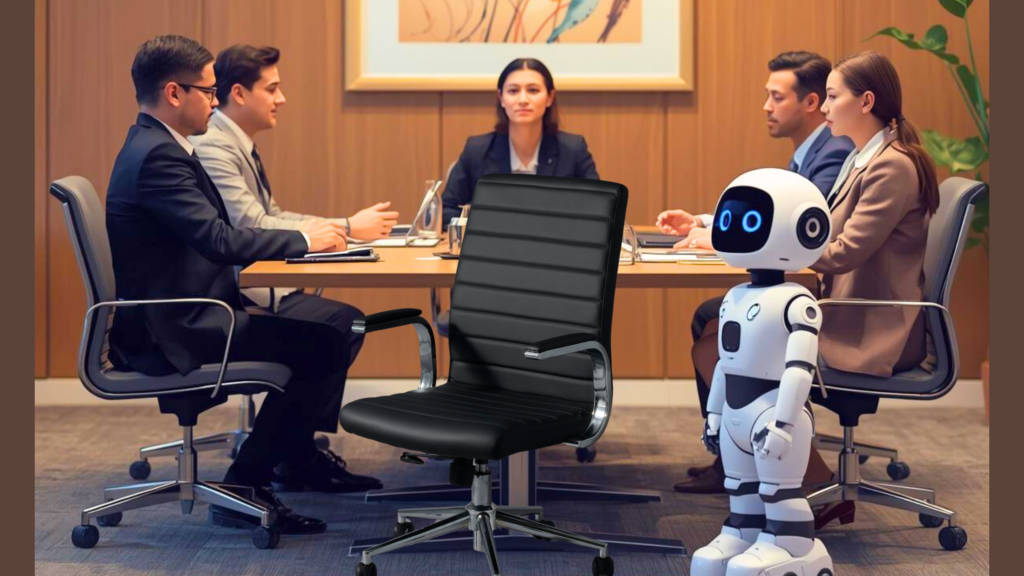
- And designing genuinely collaborative governance structures that bring clinicians, IT, governance, and patients to the table. Not just any table. The same table.
Australia’s Not Silicon Valley, but That’s Okay
Australia, of course, brings its own very Vegemite-y flavour to how this story will unfold. This is primarily because of our:
- Vast geography, with pockets of specific healthcare needs.
- Deeply held commitment to universal care (and national hobby of arguing about how to deliver it), and our
- Increasingly diverse population rightly expecting culturally safe care, and not a one-size-fits-all medical model.
All of which means that ChatGPT Health will have to adapt to us, and our context. Not the other way around.
Now it can be argued that Australian healthcare leaders have seen more than their share of shiny digital promises that’ve come and gone. Such as those portals that no one logged into, the clinical comms apps that were quietly abandoned in favour of WhatsApp, and the dashboards that wow-ed boards… and went on to change almost nothing at the frontline.
So why then does the hype about this tech feel different from all the tech that came before it? Why all the nervousness?
For one disarmingly simple reason: people are actually using it.
Not because it’s clinically perfect —it isn’t, but because it feels human. It explains things in plain language. It responds to questions. It doesn’t rush you out the door like you’re a late appointment.
This combination of accessibility plus conversational intelligence, is powerful. And once people experience it, their expectations re-calibrate very quickly.
So the real question for leaders isn’t whether this tool is flawless or not. It’s whether our systems are ready for the expectations that it seems to have already created.
The Risk Isn’t That ChatGPT Health Gets Things Wrong
Here’s the not so taboo truth: clinicians know AI can be wrong. So the biggest risk with ChatGPT Health won’t be that it occasionally misses the mark, it will be that patients won’t always know when it does.
ChatGPT can sound impressively confident even when it’s only mostly right. And research (repeatedly) shows that people tend to trust well-phrased AI advice, sometimes more than they probably should. Turns out confidence really is persuasive, even when it’s artificial.
This is particularly concerning in Australia, where evidence seems to also suggest that people with lower health literacy may be more likely to lean on AI for health guidance. Again, not because it’s perfect, but because it’s available, polite, and doesn’t sigh audibly when they ask it a follow-up question.
Which is why without the proper guardrails, chatGPT Health wouldn’t just democratise information. It could actually quietly scale misinformation and confusion at a national level – albeit with excellent grammar and in a very reassuring tone of course.
Lagging Regulation Is Easy to Blame But Health Literacy is the Missing Strategy
Right now, tools like ChatGPT Health live in a regulatory grey zone. They’re not officially medical devices despite quietly influencing medical decisions. Which is kind of like saying a GPS isn’t responsible for where you end up, even though you followed every turn it suggested. Hmmm..
It is this gap that can create some very real risks —reputational, clinical, and ethical. Especially for organisations that sprint ahead without stopping to install any governance along the way.
Waiting for perfect regulation, of course, isn’t realistic. But neither is pretending accountability is optional. And this is where good leadership can actually earn its keep. Setting clear boundaries for use, insisting on transparency, and embedding oversight before an incident forces a very awkward, very public reaction.
And let’s be clear: ChatGPT Health can’t replace health literacy. But it can shine a very bright spotlight on where health literacy is weak. Because if people can’t tell the difference between general information and personalised medical advice, there is no disclaimer in the world (no matter how well-worded) that is going to save them.
Forward‑thinking organisations are already investing in AI‑aware health literacy, teaching clinicians and patients how to use these tools safely, critically, and appropriately. They’re getting ahead of this. And ironically, that may end up being the smartest investment health systems make this decade… well before the regulations finally do arrive, panting and out of breath.
The Future Isn’t Written. But it is ChatGPT-Assisted.
If the future of healthcare were already written, then ChatGPT Health would have somehow got hold of the embargoed first draft, complete with footnotes, a summary box, and a suggested reading list, by now.
But healthcare leaders, as the world’s most glorified gatekeepers, still do get a chance to have a say in how the final story turns out. I mean, sure, there probably will be wrestling matches with policy, ethics, patient trust, workforce transformation, and that perennial question: Will this make care more human… or just more complicated?
But the bottom line is that ChatGPT Health is coming whether organisations feel ready or not. Healthcare leaders therefore, must act now to determine how it will be received.
The real question isn’t whether the technology is warranted. It’s whether Australia’s healthcare leaders will actively shape how it supports care, or spend the next five years floundering to react to its unintended consequences. Quite possibly in a series of increasingly urgent meetings.
All this won’t be determined by an algorithm either. It can only be determined by the clarity, courage, and judgement of the people who are leading the system today.
And that, thankfully (and somewhat ironically), still does remain a very human responsibility.
To receive thought leadership insights on a regular basis, Follow AIHE on LinkedIn here and Become an AIHE Member here.
To upskill your healthcare leadership capabilities, explore our 2026 course and program offerings here.